ISO 9001, 14001, and 45001 certified manufacturing facility. Ensuring metallurgical consistency and dimensional precision.
Core Manufacturing Specifications
Annual Production Capacity 15,000 Tons
Integrated casting, heat treatment, and full CNC machining facilities dedicated to heavy-duty mill rolls.
Core Material Grades Cast Mill Rolls
Chill & Indefinite Chill Iron (ICDP), Nodular Cast Iron, High-Cr Iron/Steel, Alloy & Graphitic Steel, Adamite (Semi-Steel), and HSS.
Applicable Mill Types Flat & Long Products
Specially engineered for Hot Strip Mills, Bar & Wire Rod Mills, and Section & Profile Mills.
Application Stands R1-R2 / F1-F7
Supplying tailored roll solutions covering the entire rolling line, from roughing to finishing stands.
Quality & Inspection Standards GB/T & ISO
Dimensional tolerances strictly meet GB/T 1804; chemical compositions conform to GB1503 and GB1504 standards.
Quality Assurance & Full Traceability
Eliminating hidden flaws and ensuring structural integrity before any roll leaves our facility.
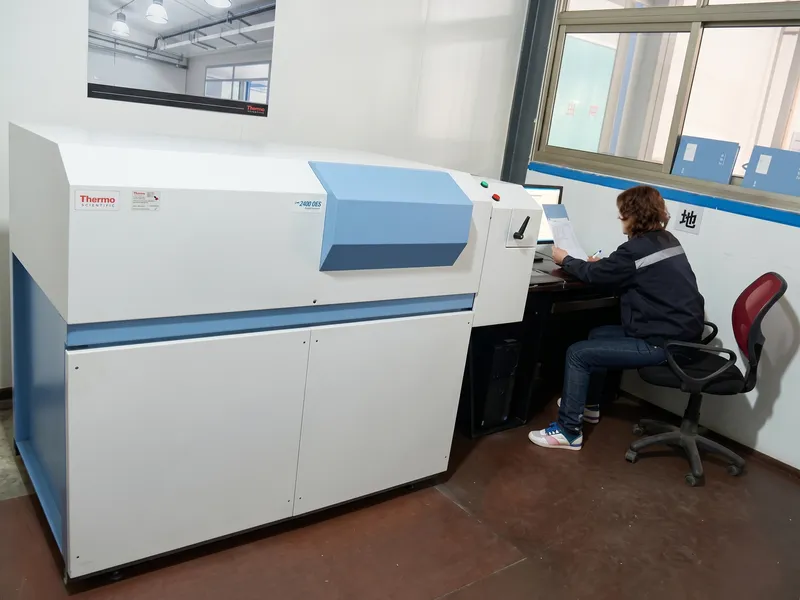
OES Chemical Composition Analysis
Utilizing Thermo Scientific optical emission spectrometers (OES), we verify the elemental composition of molten steel for each heat. This step monitors alloy compliance to targeted material grades.
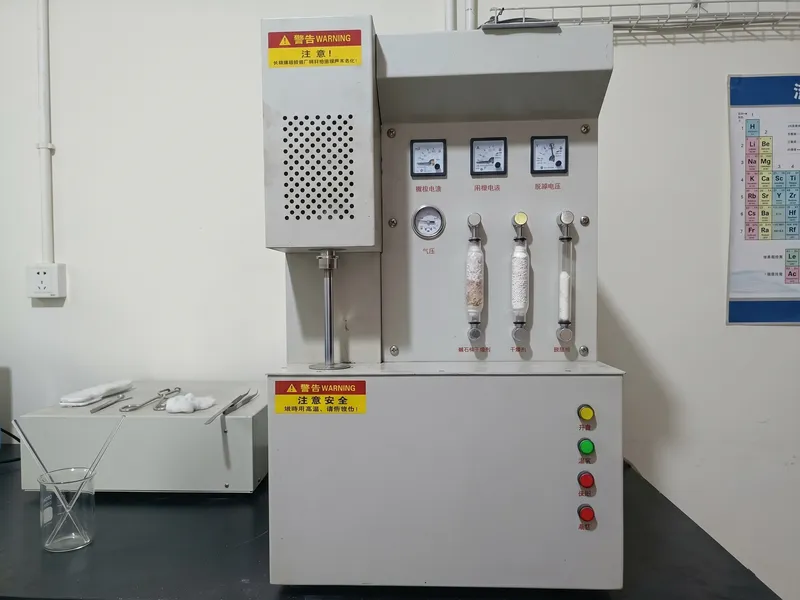
Carbon & Sulfur Analysis
Dedicated carbon and sulfur analyzers are deployed alongside OES to accurately measure trace elements. This process assesses the baseline structural integrity and toughness of the cast matrix.
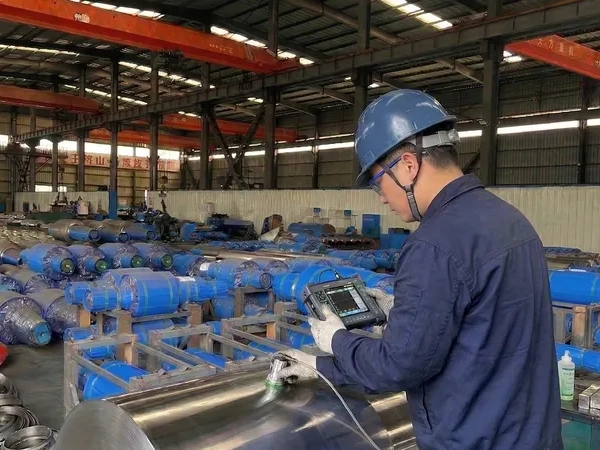
Ultrasonic Non-Destructive Testing (UT)
Finished rolls undergo manual digital A-scan Ultrasonic Testing. Technicians evaluate bottom echo reflections to detect internal porosity and accurately verify the working layer depth.
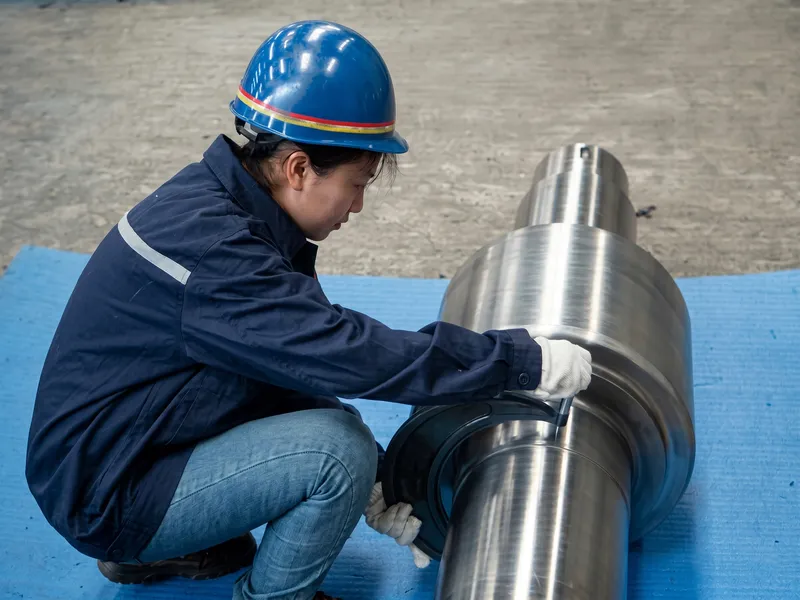
Micrometer Dimensional Inspection
Machined rolls are measured using heavy-duty outside micrometers and depth gauges. This procedure controls geometric tolerances and checks fitment dimensions according to GB/T 1804 standards.
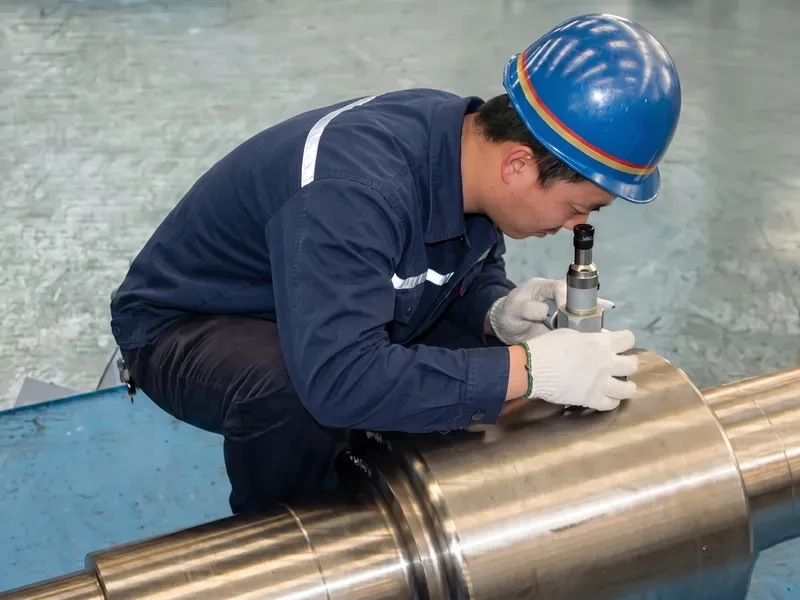
In-Situ Metallographic Examination
Portable metallographic microscopes are utilized to examine the surface microstructure of the machined rolls. This inspection evaluates graphite morphology and carbide distribution, which are key indicators of the material’s toughness and wear characteristics.
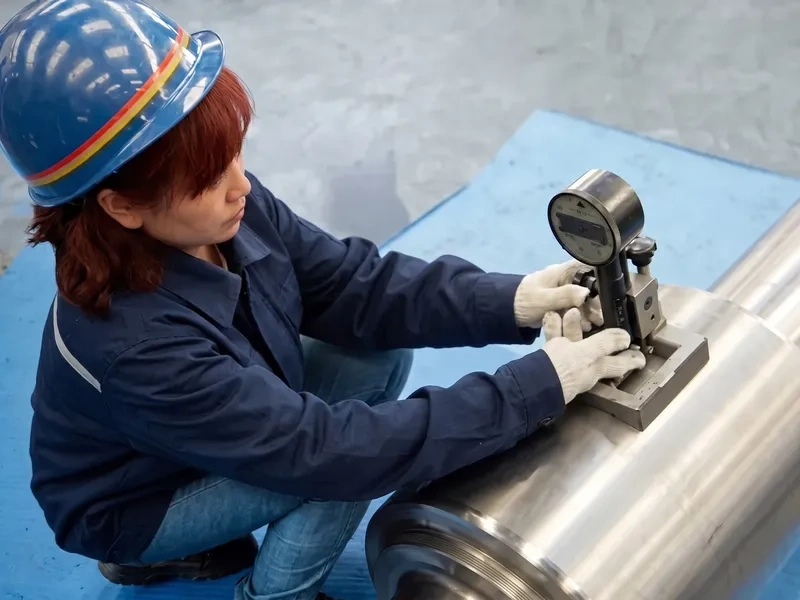
Surface Hardness Verification
Portable hardness testers are used to systematically map the surface hardness across the entire roll barrel. This procedure assesses the uniformity of wear resistance.
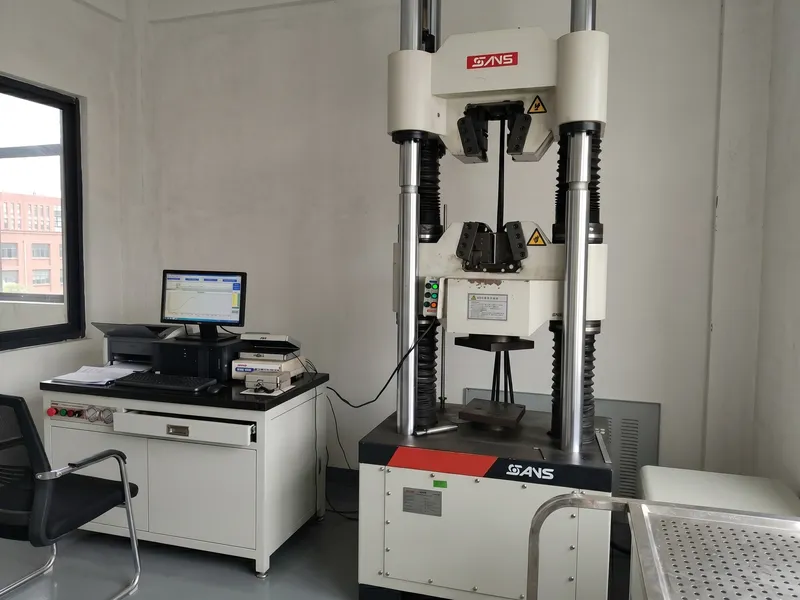
Mechanical Tensile Testing
Tensile and yield strengths are tested using SANS universal testing machines on test blocks from the same heat. The resulting data is compiled into the final EN 10204 3.1 Material Test Certificate (MTC).
Submit Your Roll Drawings for Technical Evaluation
Our engineering team will review your dimensional tolerances, material specifications, and NDT requirements to provide a detailed manufacturing feasibility report and pricing.